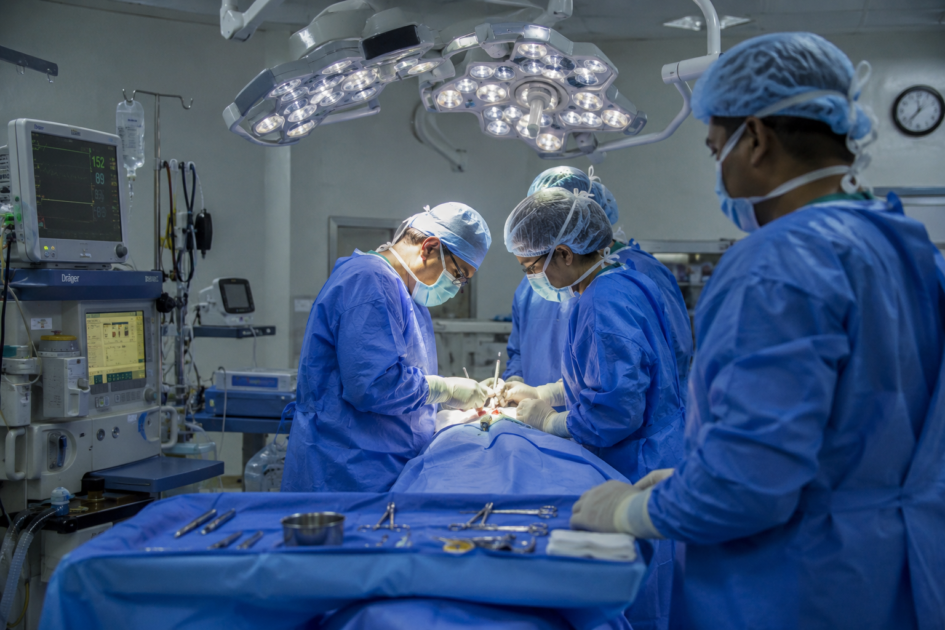

The everyday life of a doctor is overwhelming. Just like other occupations too.
I rarely hear people say they are content with their occupation. There will be challenges and hurdles.
Housemanship is about learning to function under pressure, with people, within an imperfect but essential system. To work well in a team that manages human life.
If you can navigate this phase well,
You will not just become a competent doctor, you will become someone others can rely on.
1. Don’t Mix Work and Personal Life
Everyday life as a doctor is already overwhelming.
Thus, I wouldn’t mix family matters during working hours
Over time, my family understood. Calls, messages, and requests are kept to a minimum when I am on duty or on call.
What happens at home, I will leave it at the gate and collect it back when I’m home.
When you step into the hospital, your focus has to be fully on the task at hand.
2. Take Care of Your Body/health Even in Small Ways
Drink plain water whenever you have the opportunity.
Dehydration affects clarity/cognitive function. By the time you feel thirsty, u already have 5% dehydration. I thank God that in the hospital we usually will have a water filter for drinking in almost every pantry.
Don’t worry about the need to go to the toilet, doctors, paramedic are know to have big bladder.
Also have something to eat, lots of nurses/colleagues can help with the group order. I would always have something inside my white coat/pockets for each and quick drink.
3. Learn to Act Professionally
Professionalism will protect you more than anything else.
Do not say things you will regret later.
If you are angry, stay quiet.
If you feel overwhelmed, step away briefly
but do it with courtesy. Ask for time, don’t just disappear (MIA).
You are working in a system with multiple levels of authority.
If something cannot be resolved at your level, escalate appropriately.
Not everything must be contained at one level.
And not every issue is yours to carry alone.
Your HOD seniors, and institutional channels exist for a reason.
Use them when needed.
And most importantly – do not bottle things up.
Even the strongest, most motivated individuals will have moments where they feel low.
4. Keep Training Yourself to be Patient
This is the reality that people are puttinh vibes on threads
In every department, there will be people who are difficult.
Dalam setandan pisang, pasti ada yang rosak.
No team is perfect.
Sometimes the issue is external–someone else’s behaviour, attitude, or limitations.
Sometimes the issue is internal — our own response, our own gaps.
Be honest enough to know the difference.
If it is yours, improve it.
If it is not, learn how to work around it without letting it consume you.
So “Suck it up.” Everything will be at its place over time
5. Build Your Basic Foundation: Knowledge is What Makes Life Easier
Life becomes easier when you understand the basics information well.
Not everything, but the common, critical things you will face every day.
For example, normal potassium levels.
What happens when potassium is high.
Why is it dangerous?
What to do immediately?
It should not be surprising, but it still is that many HOs cannot answer this confidently.
Another example -anaemia.
Know the causes.
Recognise the signs and symptoms.
Understanding what to investigate, especially in the perioperative setting, will benefit everybody
Or something even more acute – DKA.
You will see it.
You will be expected to recognise it early and start management before escalation.
These are not rare conditions.
These are daily medicines.
Read and read again. Multiple times
And read from reliable, standard references.
Because many house officers struggle not due to a lack of effort
but because they do not know the fundamentals well enough.
6. Learn Important Clinical Skills Fast
A large proportion of problems start here.
Not knowing how to take a proper history.
Not performing a good physical examination.
Remember what’s makes a” good management/treatment” is a “correct diagnosis”
If you cannot extract the right information,
you cannot detect the problem early.
And if you cannot detect the problem,
you cannot escalate appropriately to your seniors and thus leading to adverse event.
Your role is not to have all the answers.
Your role is to recognise, organise, and communicate clearly
so that definitive management can happen safely.
e.g branula insertion, CVL insertion, blood & C&S taking, ordering Blood products, referrals method. Do it until u can do it in the blink of an eye.
7. Write Down Important Notes, Reminders, Learning Points, intructions.
Carry a notebook. Do not rely on your memory, especially when you are tired.
8. Protect Your Sleep
have adequate sleeping time. Sleep early and wake up early..
Doctors often use their off days to sleep and that is completely reasonable.
Even now, if there is an opportunity, I will choose rest over unnecessary late nights.
Yes, occasionally you may want to relax, watch something, and disconnect. That is fine.
But not at the expense of sleep.
Sleep clears the mental “debris.” It restores clarity and insight for the next day.
Without it, everything becomes harder e.g thinking, decisions, patience.
Go have that “beauty sleep”
9. Be Intentional with Your Finances
Don’t forget this! Start early. Save money.
and always plan ahead.
There is truth in what people say that it is easier to face difficulties when you have financial stability.
Think about timing.
When to buy a house. When to get married.
Family expectations.
When a car is necessary and when it is not.
Not every purchase needs to happen immediately.
Not every lifestyle upgrade is essential.
10. Work with Others, Without Losing Yourself
Do not be selfish.
Help your colleagues when you can, without expecting anything in return.
That is how trust is built in a team.
But be aware.. when you take on more work, you increase your exposure to mistakes. But i dont care..
That is part of the process.
You may be scolded. You may feel it is unfair that ur intention is to help…
But over time, with persistence, that same effort becomes experience.
And experience built confidence.
What feels like a burden now can later become something that works in your favour.
11. Do Not Be Crushed by Being Scolded
Being corrected, sometimes harshly, is part of training. I don’t know how to say this politely… It’s inevitable that some people are like that. (human is weird)
Not all seniors/staff communicate well.
But not all scolding comes from bad intentions.
Some seniors push because they expect you to improve.
Some are watching more closely than you realise, even if they do not say it.
Take what is useful. Let go of what is not.
Do not let one moment define your trajectory/goals
12. Let Go of Unnecessary Weight
Do not hold grudges.
Not everything deserves to be carried forward. It will just unnecessarily occupy ur brain
At the end of it all, we are all moving through the same path…
growing older, falling sick, eventually leaving.
Keeping resentment does not make the journey better.
13. Ignore Unnecessary Comments
You will encounter noise especially from surrounding people.
Gossip exists in every department.
There is a saying: “pintu dan dinding pun bercakap” … Even walls seem to talk.
As long as you know you are giving your best, don’t let other people’s opinions shake you.
Hold on to a clear aim and keep your focus steady. Break it down what needs to be done now, and where you want to be in the long run. Both matter.
Short-term discipline builds the path toward long-term direction.
People will talk. They always do. But not all noise deserves your attention.
Like the hawk and the crow – The crow may circle, disturb, and make noise. The hawk does not fight back. It simply rises higher, to a level the crow cannot reach. Eventually, the disturbance fades on its own.
Keep rising. The higher your focus, the less their voices matter.
14. Do Not Go Through Your Problem Alone
Everyone has different coping mechanisms.
Have someone to talk to — Friends. Seniors. Family.
You do not need a large circle. Just some trusted companions.
Just a few people who understand or are willing to listen.
Keeping everything to yourself will slowly wear you down & build up a volcano of stress.
Sharing it makes it lighter.
If you think u need some time to rejuvenate/ refresh your intention. Discuss with your superior and take an enjoyable holiday. But not always ya.
15. Good Attitude Will Carry You Further Than You Think
Skills can be taught. Knowledge can be acquired.
But attitude … consistency, willingness to learn, reliability…
That is what people remember.
One day, you will start to see the return on it.
In trust. In opportunities.
In how others choose to work with you.
When someone teaches you, we shouldn’t say, “I already know/have done that, somebody taught me like this”
A full cup cannot be filled. Even if you know it, listen again. You may catch something you missed, or understand it at a deeper level.
Remember this: as a new doctor, you are building your reputation from day one.
A good reputation is more valuable than anything else. It takes years to build, and a moment to destroy.
Avoid unnecessary arguments with seniors.
Unless patient safety is at risk, or something is clearly wrong, learn first before you challenge. We are a culture that values respect and adab. Thus, do not lose that.
16. Be Proactive
What matters most in the ward / OT is this optimistic and proactive behaviour
Know what needs to be done. Do it before being asked. Help ease the workload of others. Once or twice, people will guide you. But if you keep waiting to be told, eventually they will just do it themselves.
An extra hour is never wasted.
You are helping people. And what you give will find its way back to you.
If you support others, others will support you one day.
If you turn away, the same will return to you.
17. Step Outside Clinical Work Sometimes
Join non-clinical activities.
Department events, family days, sports, awareness programmes, national meetings as these moments may show a different side of people/colleagues/staffs.
You will see colleagues and seniors beyond their clinical roles.
Sometimes it builds understanding and changes your perception of others and the system.
And sometimes, it simply reminds you that everyone is human.
18. Be Humble
You may have spent years in medical school but the nurses, assistants, and support staff have been in that ward far longer. They understand how things actually work. There is a kind of practical intelligence that cannot be taught in lectures.
You don’t need to reinvent the way.
Help with small things.
Move the oxygen tank. Push the bed. Assist with suction. Do simple dressings. Clean up when needed. Not because it is your job description, but because it builds you.
It shapes how people see you and more importantly, how you see yourself.
A respected professional understands the system from the ground up.
In order to become a good leader, learn on becoming a good follower first.
19. Set Your Intention Right
This is not about money, status, or authority. This is about service. Public service. Serving people when they are at their most vulnerable.
Do that well, and everything else will follow.
If you are new in the ward, understand this early: survival is not just about knowledge. It is about understanding the unspoken “do’s and don’ts” that keep the system moving.
But somehow what we often call “common sense” is not always that common anymore.
I have written about this before, but it is worth repeating.
First, “masuk kandang kambing mengembek, masuk kandang lembu menguak.”
Adapt. Every ward has its own culture, rhythm, and expectations. Learn it. Respect it. Blend into it before trying to change anything.
20. Share Your Knowledge & Experience with Others
When you look back at housemanship and being a very junior MO,
It will be how you learned to work with people,
how you handled pressure,
and how you chose to carry yourself through it all. (develop Coping mechanism over time)
After we learn a skill, after we become comfortable, even proficient, with our work.
It is easy to forget what it felt like to struggle at the beginning.
And slowly, almost without noticing, patience becomes thinner when we meet someone who is just starting. Especially when that person is slower, less eager, or simply different from how we were when we first learned.
People respond to this in different ways.
– Some will teach once very quickly because they have many other things to do, and expect you to figure out the rest on your own.
– Some will not explain much at all, but expect you to observe and learn — watch carefully, pick it up, repeat it.
this is what people say as ‘See 1, do 1 & teach 1″
– Some react with frustration…“takkan ni pun tak tahu?”, “tak pernah tengok ke?” as if learning should happen instantly.
– And some will take the time to explain, then demonstrate, and allow you space to grow.
so choose which seior we wanna be later.. dont repeat the negativity..
Housemanship is about building your strength on how you think, how you work, how you protect yourself.
To develop competency in managing patients efficiently
Once those systems are in place,
The same clinical workload feels different.
More manageable. More structured. More within your control.
We are all working hard as a small part of our country’s health care foundation/system
Everyone in the system is carrying burden/responsibility.
And when you look closely at the ur senior, specialists, the consultants. Even until now I still look up at them..
The ones who truly stand out, you begin to realise something humbling. Their standard is high not by chance, but by years of consistent effort, discipline, and sacrifices.
There will come a point where you feel it is difficult to reach that level.
And perhaps that is where your growth as a ‘healer’ really begins.
My humble oppinion,
Friday@10/4/2026
Disclaimer: The information provided in this blog reflects the personal views of the author and is intended for general informational purposes only. Readers are advised to conduct their own research or consult with appropriate professionals before making any decisions based on this content.